
Here you’ll find the full Mass Effect Andromeda Galaxy Map.
A planet that has an asterik (*) next to it means it can be scanned. Other anomalies will be listed (starting with “ANOMALY”).
When we enter a new cluster, we receive a comment from a member of the crew (mostly Kallo and Suvi). Those comments can be found as well below for each cluster.
You can find the other Mass Effect Galaxy Maps here.
This page is long and full of images, it can take a few seconds before everything appears. It also looks better on computer than on mobile!
ANASA
SUVI: Radio emissions from the black hole are incredible out here. The song of the dark side of creation.
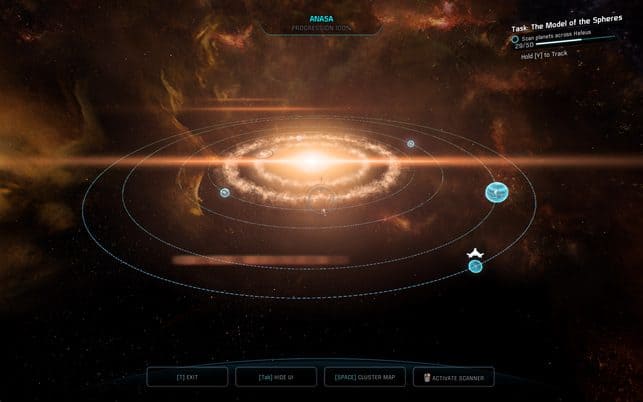
Acermos
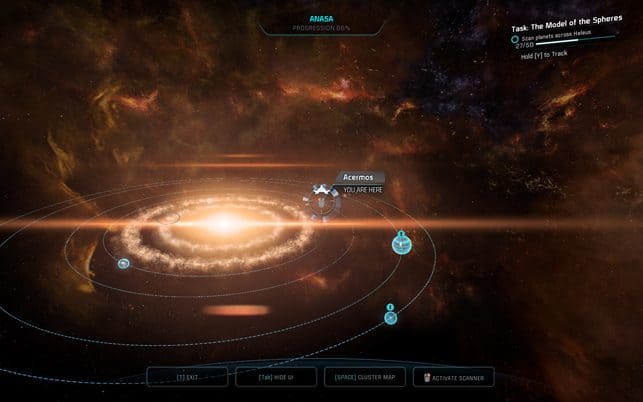
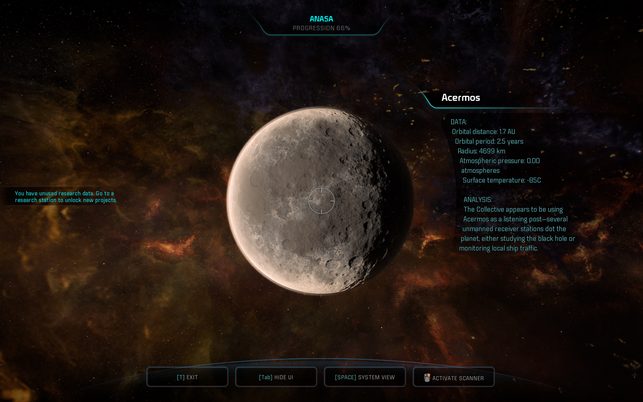
DATA:
Orbital distance: 1.7 AU
Orbital period: 2.5 years Radius: 4699 km
Atmospheric pressure: 0.00 atmospheres
Surface temperature: -85C
ANALYSIS:
The Collective appears to be using Acermos as a listening post-several unmanned receiver stations dot the planet, either studying the black hole or monitoring local ship traffic.
ANOMALY: Starship Wreckage
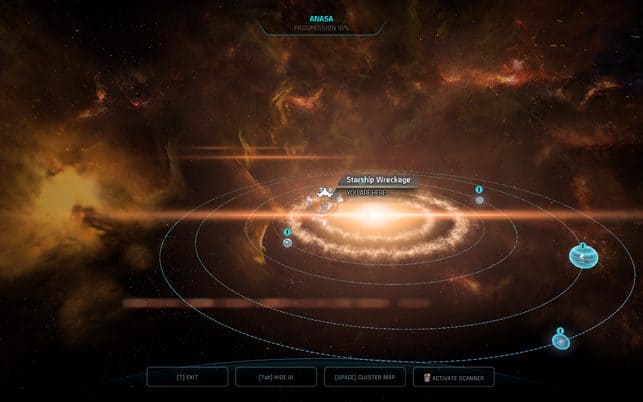
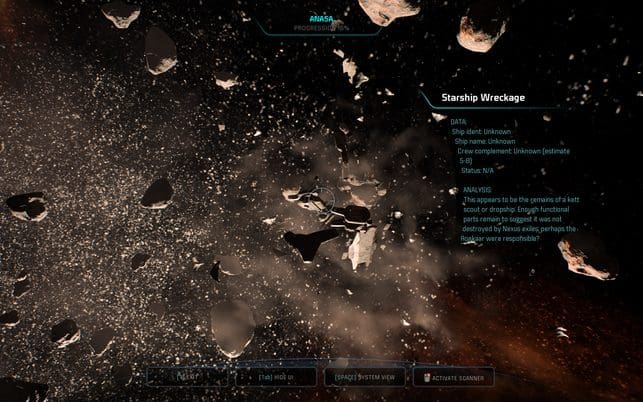
DATA:
Ship ident: Unknown
Ship name: Unknown
Crew complement: Unknown (estimate 5-8)
Status: N/A
ANALYSIS:
This appears to be the remains of a kett scout or dropship: Enough functional parts remain to suggest it was not destroyed by Nexus exiles perhaps the- Roekaar were responsible?
H-205
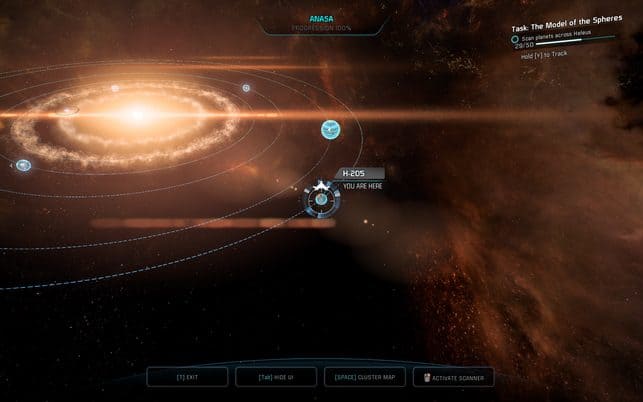
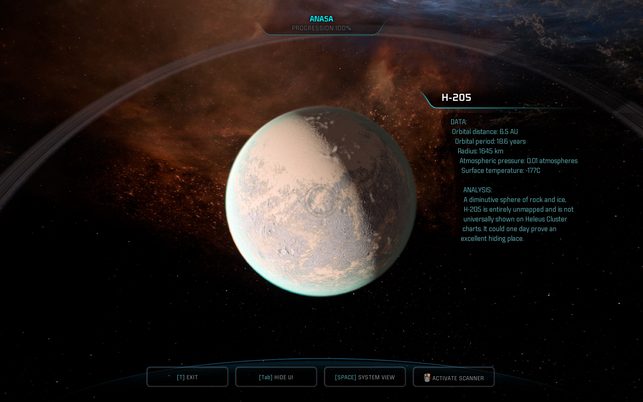
DATA:
Orbital distance: 6.5 AU
Orbital period: 18.6 years
Radius: 1645 km
Atmospheric pressure: 0.01 atmospheres
Surface temperature: -177C
ANALYSIS:
A diminutive sphere of rock and ice. H-205 is entirely unmapped and is not universally shown on Heleus Cluster charts. It could one day prove an excellent hiding place.
H-444
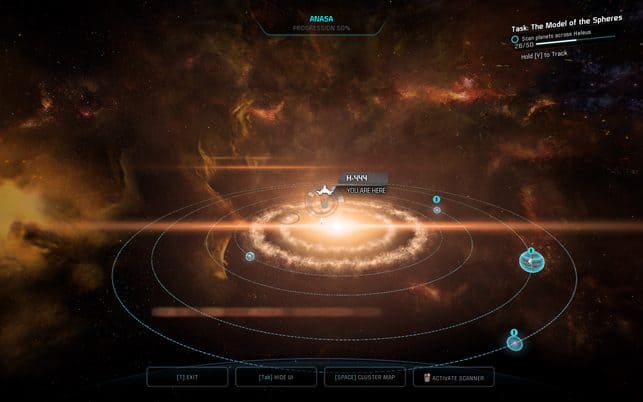
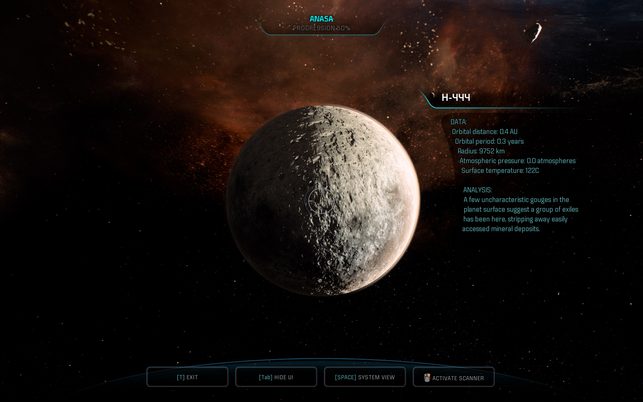
DATA:
Orbital distance: 0.4 AU
Orbital period: 0.3 years
Radius: 9752 km
Atmospheric pressure: 00 atmospheres
Surface temperature: 122C
ANALYSIS:
A few uncharacteristic gouges in the planet surface suggest a group of exiles has been here, stripping away easily accessed mineral deposits.
Mornax Vinkaar
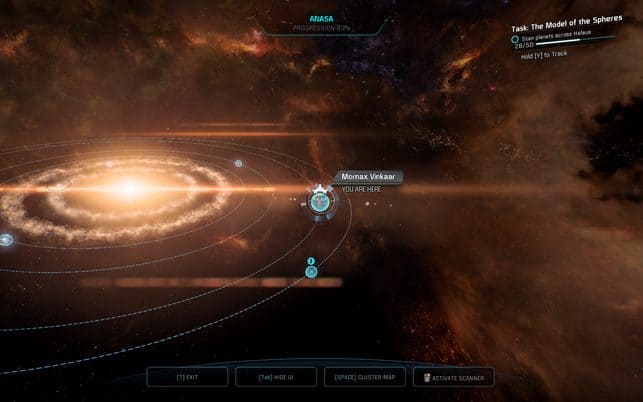
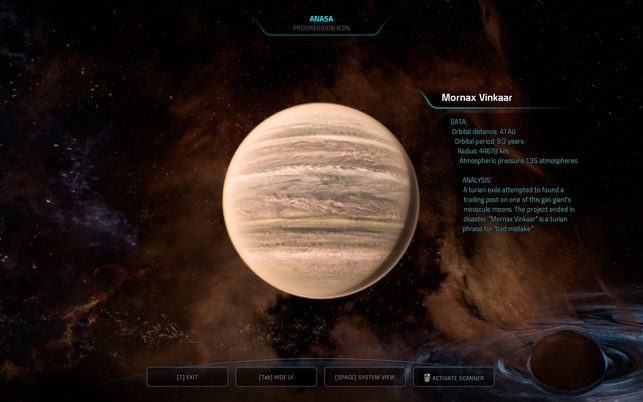
DATA:
Orbital distance: 4.1 AU
Orbital period: 9.3 years
Radius: 44679 km
Atmospheric pressure: 1.35 atmospheres
ANALYSIS:
A turian exile attempted to found a trading post on one of this gas giant’s miniscule moons. The project ended in disaster. “Mornax Vinkaar” is a turian phrase for “bad mistake.”
Sedele*
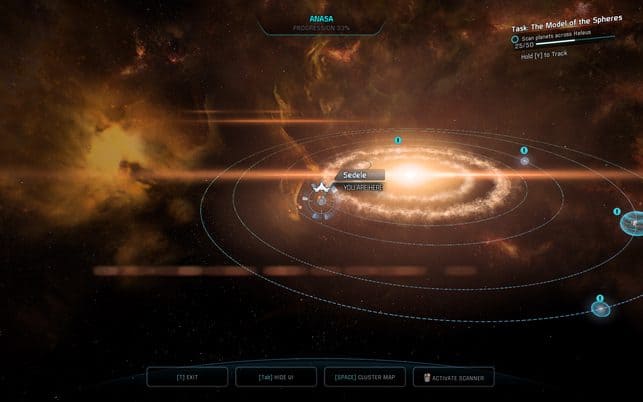
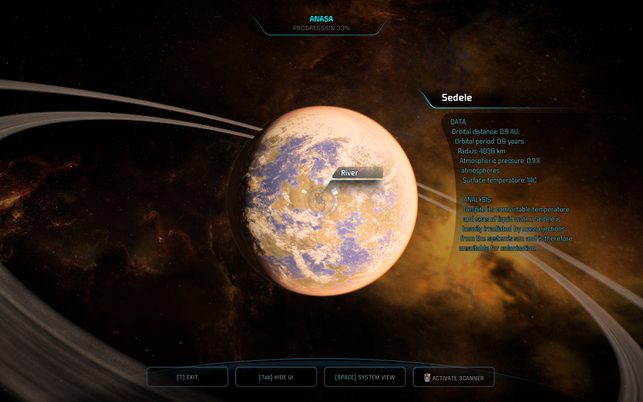
DATA:
Orbital distance: 0.9 AU
Orbital period: 09 years
Radius: 4838 km
Atmospheric pressure: 0.33 atmospheres
Surface temperature 14C
ANALYSIS:
Despite its comfortable temperature and seas of liquid water, Sedele is heavily irradiated by mass ejections from the system’s sun and is therefore unsuitable for colonization.
Sedele – River
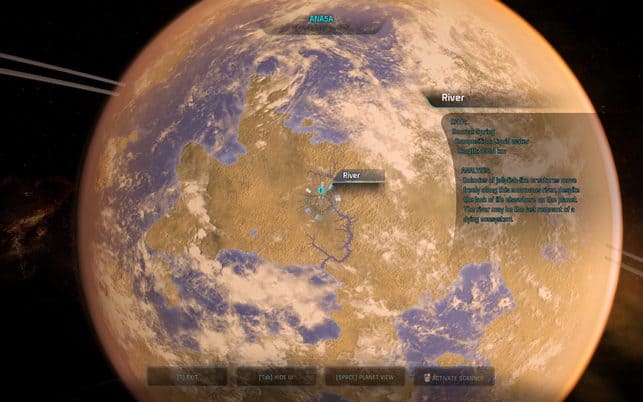
DATA:
Source: Spring
Composition: Liquid water
Length: 4354 km
ANALYSIS:
Colonies of jellyfish-like creatures move freely along this enormous river, despite the lack of life elsewhere on the planet. The river may be the last remnant of a dying ecosystem.
SCAN RESULT:
XP + 270
BOSAVAY
SUVI: Looks like we’re headed to a pretty energetic star.
KALLO: Deploying radiation and emission screens. Our sensors should be safe.
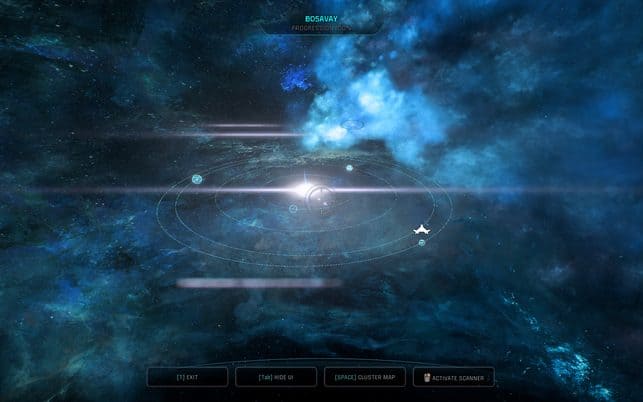
ANOMALY: Element Zero
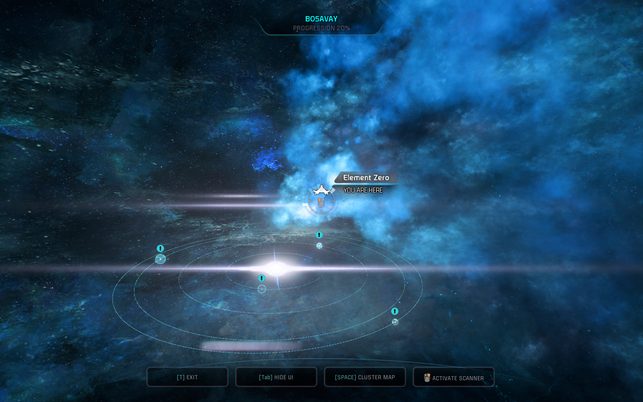
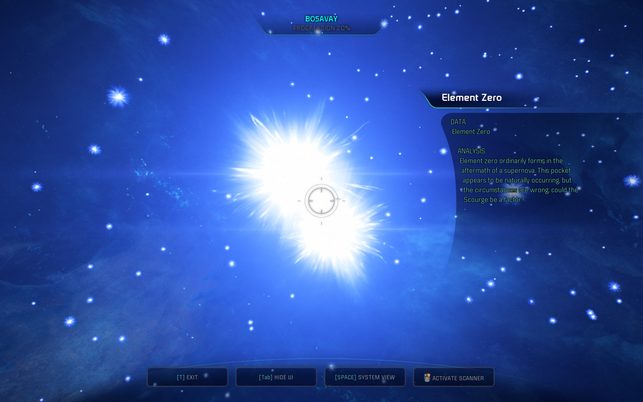
DATA:
Element Zero
ANALYSIS:
Element zero ordinarily forms in the aftermath of a supernova. This pocket appears to be naturally occurring, but the circumstances are wrong; could the Scourge be a factor?
Ishang
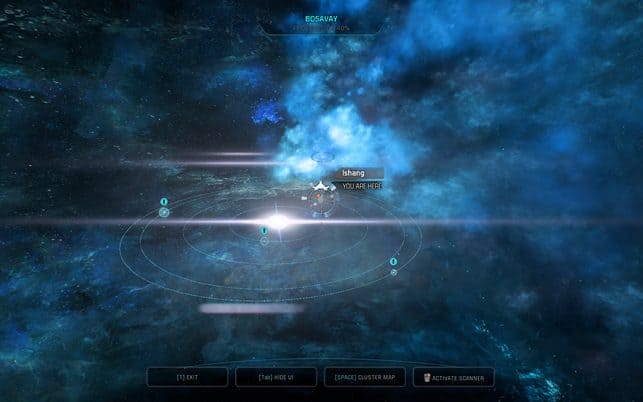
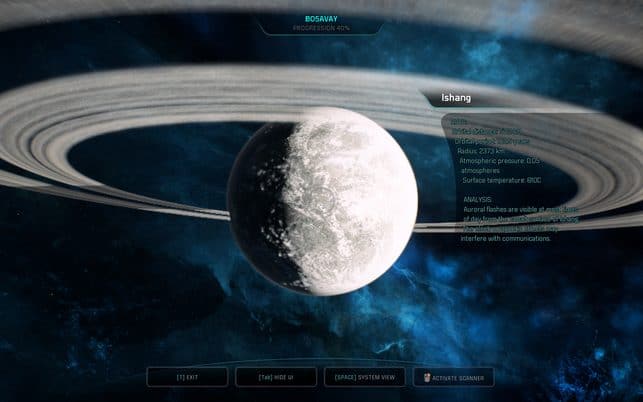
DATA:
Orbital distance: 57.2 AU
Orbital period: 102.5 years
Radius: 2373 km
Atmospheric pressure: 0.05 atmospheres
Surface temperature: 810C
ANALYSIS:
Auroral flashes are visible at most times of day from the cobalt surface of Ishang. The electromagnetic effects may interfere with communications.
Pas-51*
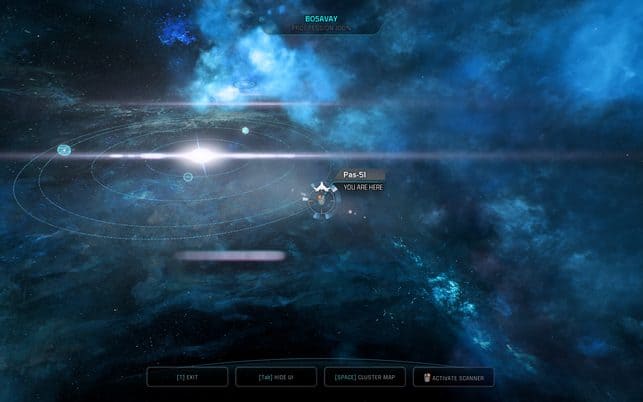
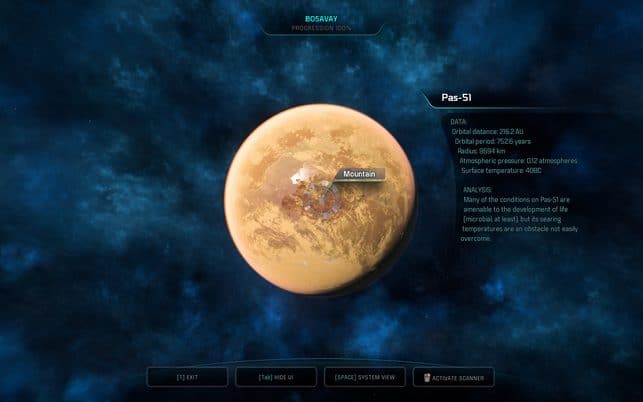
DATA:
Orbital distance: 216.2 AU
Orbital period: 752.6 years
Radius: 9694 km
Atmospheric pressure: 0.12 atmospheres
Surface temperature: 408C
ANALYSIS:
Many of the conditions on Pas-51 are amenable to the development of life (microbial, at least), but its searing temperatures are an obstacle not easily overcome.
Pas 51 – Mountain
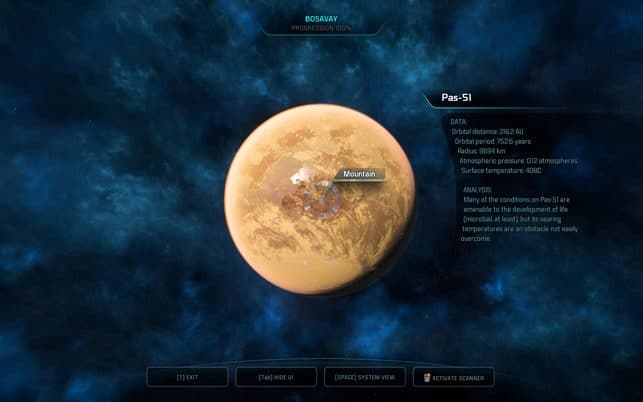
Mountain
DATA: Height: 8.8 km
Origin: Tectonic
ANALYSIS:
Water vapor escapes from cracks in this mountain, suggesting that somewhere deep underground-where temperatures are far cooler-a reservoir may exist. If lifeforms exist on Pas-51, it will be there.
SCAN RESULT:
XP + 270
Pas-60
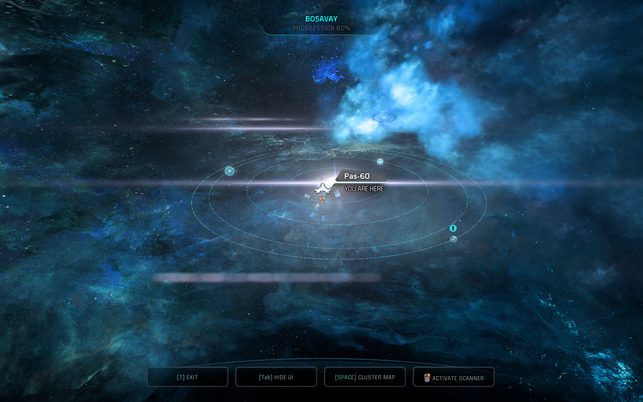
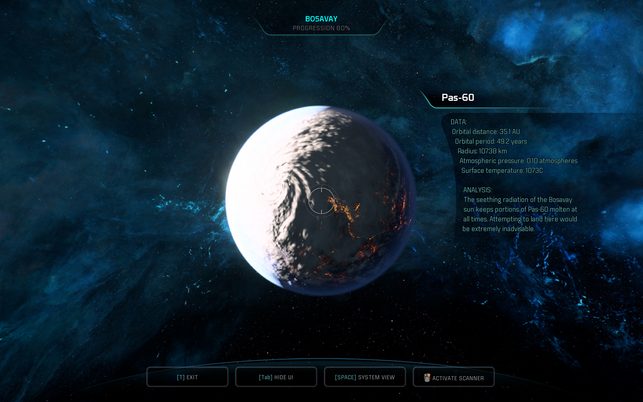
DATA:
Orbital distance: 35.1 AU
Orbital period: 49.2 years
Radius: 10738 km
Atmospheric pressure: 0.10 atmospheres
Surface temperature: 1073C
ANALYSIS:
The seething radiation of the Bosavay sun keeps portions of Pas-60 molten at all times. Attempting to land here would be extremely inadvisable.
Tyfondra
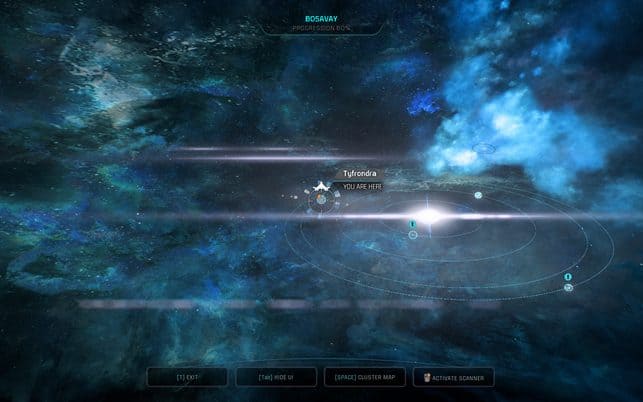
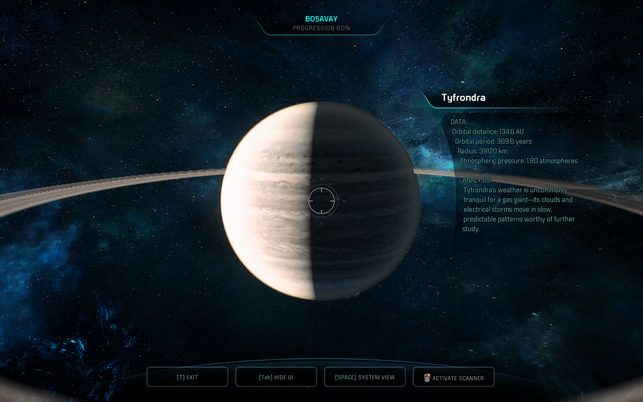
DATA:
Orbital distance: 134.6 AU
Orbital period: 369.6 years
Radius: 39120 km
Atmospheric pressure: 1.80 atmospheres
ANALYSIS:
Tyfrondra’s weather is uncommonly tranquil for a gas giant-its clouds and electrical storms move in slow, predictable patterns worthy of further study.
CIVKI
DAR’HEGAH
SUVI: They named this system after a batarian pioneer. Their first astronaut. It’s good to remember these things.
ANOMALY: Vessel (Wreckage)
DATA:
Classification Kett scout
Structural integrity: 68%
Life signs: None
ANALYSIS:
This kett scout vessel appears to have been abandoned in the asteroid belt after an engine failure. Its aimless drifting among the asteroids has resulted in significant damage, but some materials may be salvageable.
SCAN RESULT:
+1 IMPACT RESTRICTORS
+1 UNCHARGED BIOREADER
+1 KETT SEALANT
+1 BIONACENT CONVERTER
+1 BIONACENT CONVERTER
+1 BIOELECTRIC INFUSERS
+1 OPTO-ELECTRIC MODULE
Denesh
DATA:
Orbital distance: 15.5 AU
Orbital period: 111.6 years
Radius: 2553 km
Atmospheric pressure: 0.02 atmospheres
Surface temperature: -241C
ANALYSIS:
Cobalt and nickel form the outer layer of Denesh’s crust. Scans suggest the planet is far less tectonically stable than it appears.
H-505*
DATA:
Orbital distance: 0.8 AU
Orbital period: 1.3 years
Radius: 6636 km
Atmospheric pressure: 21.39 atmospheres
Surface temperature: -27C
ANALYSIS:
Hidden from early surveys by reflective objects in Dar’hegah’s asteroid belt, H-505 is a frigid world with a krypton-nitrogen atmosphere
H-505 – Crater
DATA:
Hypervelocity impact crater (largest)
Rim diameter: 402 km
Depth: Approx. 21 km
Ejecta: Mineral deposits, heavy metals
ANALYSIS:
This is the largest of multiple impact craters, suggesting a swarm of debris-possibly from the asteroid belt-struck H-505 in the distant past.
SCAN RESULT:
XP + 270
Jegraph
DATA:
Orbital distance: 0.4 AU
Orbital period: 0.5 years
Radius: 2499 km
Atmospheric pressure: 0.00 atmospheres
Surface temperature: -75C
ANALYSIS:
Sometime in the past century, Jegraph was impacted by a very large or very fast object (natural or artificial] that cracked open its mantle and caused a continuing series of quakes.
Ne’grale
DATA:
Orbital distance: 3.9 AU
Orbital period: 14.1 years
Radius: 2587 km
Atmospheric pressure: 101.68 atmospheres
Surface temperature: 19C
ANALYSIS:
Ne’grale’s crushing atmosphere is toxic and violent; its density makes scans difficult. The planet’s rings appear to be of relatively recent origin, possibly related to the Scourge.